


· Why copper ·
THE COURSE IS A WALL OF GREEN. COPPER TEARS IT DOWN.
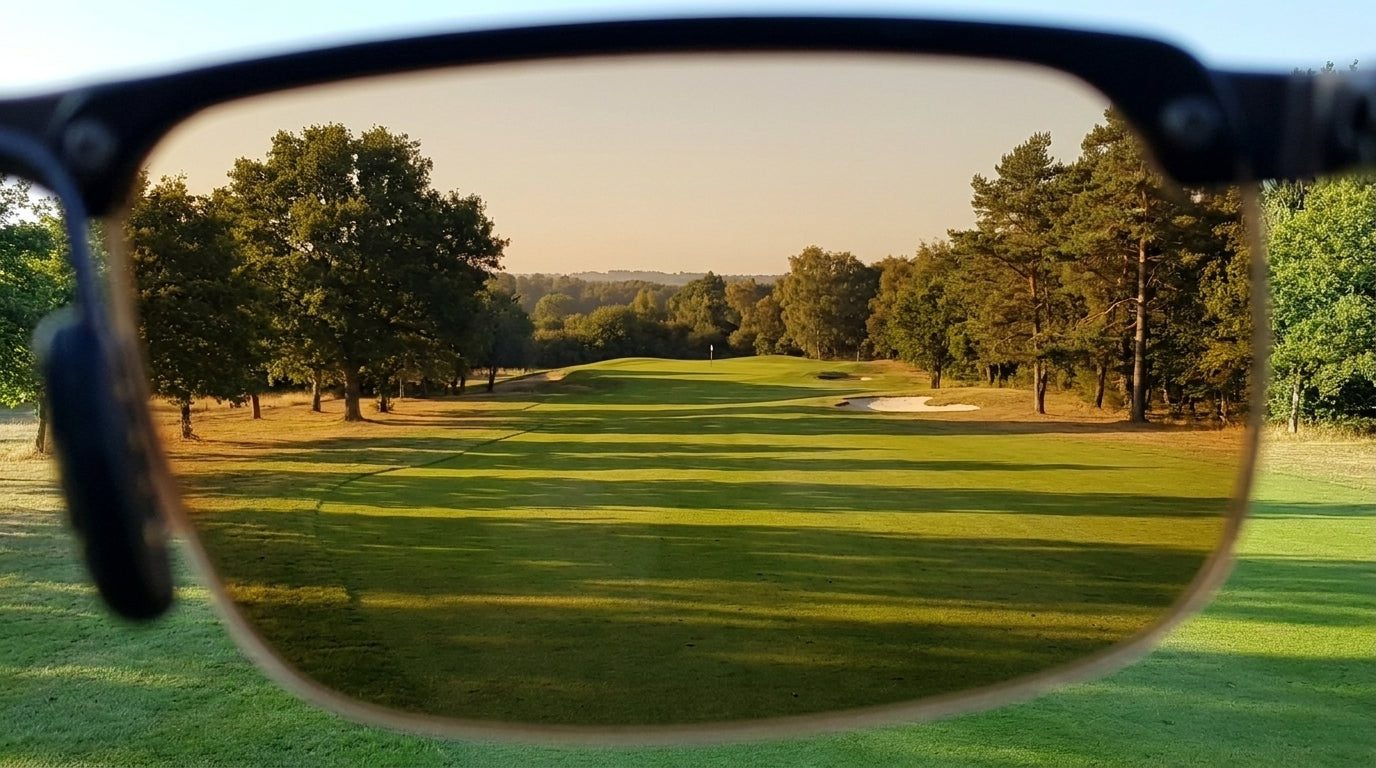
Stand on any tee box and count the greens. Fairway green, rough green, fringe green, tree-line green, putting-surface green. Your eye is drowning in one color — and everything you actually need to see is hiding inside it. The slope. The grain. The seam where fairway becomes rough. The ball.
A copper lens doesn't just dim the sunlight. It edits it. Copper selectively mutes the flood of green wavelengths and lets the reds and yellows through — the exact hues that live in grass texture, in dry patches, in the subtle color shifts that mark a slope you'd otherwise never see. The wall of green separates into layers. Contours you used to squint for are just... there.
This is why the tint on serious golf lenses is never an accident and never grey. It's warm — copper, rose, bronze — because that's the family of tints that turns a golf course from one color into a map.
Copper doesn't darken the course. It de-clutters it.
· The polarized trap ·
YOUR POLARIZED PAIR IS FILTERING INFORMATION YOU PAID GREEN FEES TO READ.
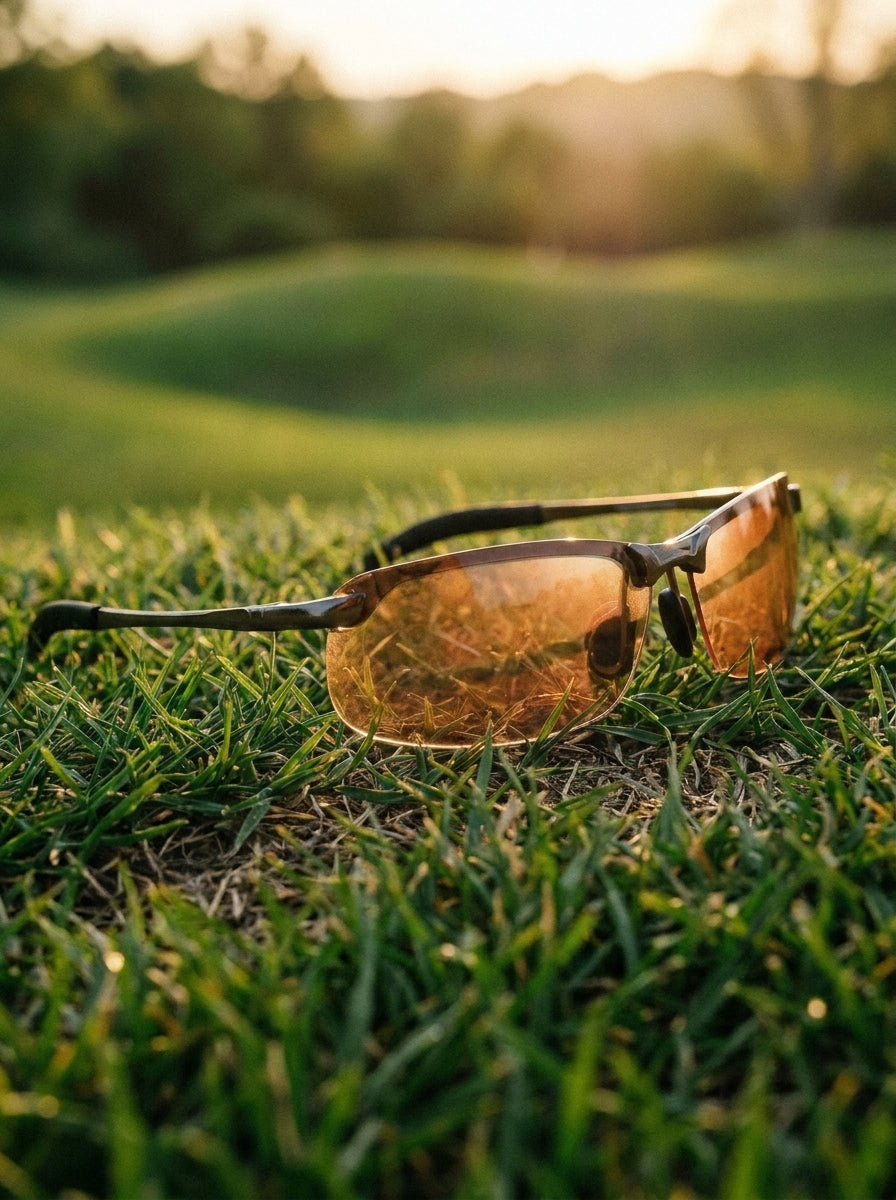
Polarized lenses were the premium checkbox. You probably paid extra for it. And it earns its keep — on water, on asphalt, anywhere the world throws flat horizontal glare at your eyes. That's the job polarization was built for.
Here's what nobody at the sunglasses counter mentions: a putting green doesn't have that problem.
The sheen coming off the grass isn't windshield glare — it's the grain, telling you which way the blades lie and which way your putt will drift. The faint shimmer across a green is the slope announcing itself. A polarized filter can't tell the difference between glare you hate and glare you read. It's doing its job perfectly — on the wrong surface. The green goes flat. The break disappears. And the miss gets blamed on your stroke.
It's not just us saying it. The most respected lens engineering in golf ships non-polarized on purpose — because the people who study this for a living matched the filter to the job. Great filter. Wrong hole.
If you've ever bought "golf sunglasses" that did nothing on the greens — this is probably why. Right lens for the highway. Wrong lens for the read.


· Grey lenses ·
"FINE — I'LL JUST WEAR THE PAIR IN MY CONSOLE."
That's the reasonable next thought. You've already got sunglasses. They cost real money. Problem solved. Right?
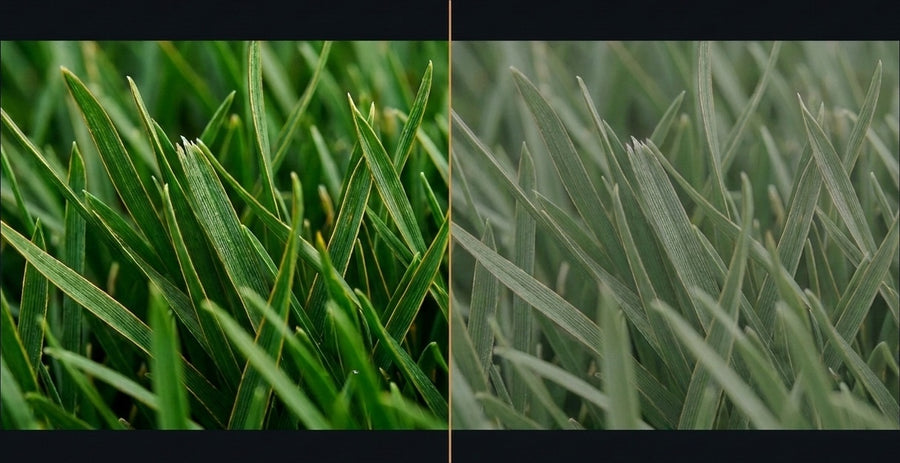
Here's the thing about your everyday pair: it was tuned for everywhere, which means it was tuned for nowhere. One all-purpose tint, engineered to dim a city street, a beach, a dashboard, and a fairway exactly the same amount. Point it at a wall of green and you get... a darker wall of green. Nothing separates. Nothing pops. The contrast problem that was costing you strokes is fully intact — just at a lower brightness.
There's a reason you've never seen a copper lens at the gas station sunglass rack. All-purpose is what gets mass-produced, because it offends no one and helps no one. Copper is a tuned lens — built to do a specific job on a specific kind of terrain. Your everyday pair was built to look good in a parking lot. This one was built to read a golf course.
You're not missing a darker lens. You're missing a smarter one.
· The named lens ·
TWO DECISIONS. ONE LENS. THAT’S REVETT COPPER.
Keep the signal
Non-polarized by design. The grain-sheen, the slope-shimmer, the natural depth your eyes use to judge 140 yards from 155 — all of it reaches your eye untouched. Nothing golf gives you gets filtered out.
Sharpen the signal
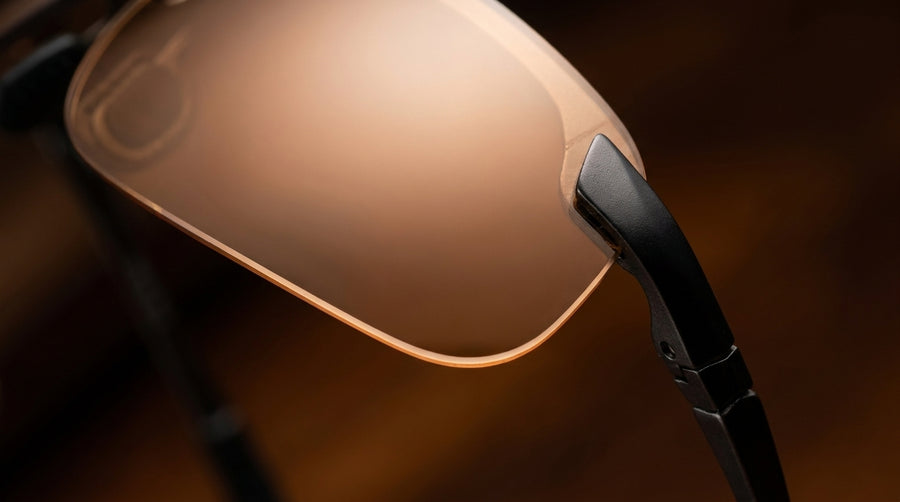
Copper-tuned tint. Mutes the green-wavelength flood, elevates the reds and yellows that carry texture and contour. The information Part 1 preserved, Part 2 makes impossible to miss.
Most sunglasses are built to make the world dimmer. Revett Copper is built to make one specific place — the golf course — legible.
· Every light on the card ·
BRIGHT ON 3. OVERCAST ON 9. SHADED ON 14. ONE LENS.
The instinct says: sunnier day, darker lens. The instinct is wrong. Go too dark and the first shaded tee box turns into a cave — you're lifting your glasses to read a putt, which means you bought sunglasses you can't golf in.
Copper lives in the transmission sweet spot the premium golf lenses standardized on — dark enough to relax your eyes on a cloudless back nine, bright enough to keep detail alive under trees and cloud cover. The round changes light six times. Your lens shouldn't make you choose which six holes to see.
· Comfort ·
YOUR EYES ON THE 18TH TEE SHOULD FEEL LIKE YOUR EYES ON THE 1ST.
Four-plus hours of squinting is its own fatigue — the kind you feel as a headache on the drive home and as a wobbly read on the 16th green. Copper filters the harsh short-wavelength blue light that scatters hardest in open sky and haze, so your eyes spend the round relaxed instead of braced. Less squint, less strain, more left in the tank when the match is actually decided.
· The math ·
THE $200 BRANDS GOT THE LENS RIGHT. THEY GOT THE PRICE WRONG.
Check the spec sheet on the premium golf lenses and you'll find our exact playbook: warm-tint base, non-polarized on purpose, 20–30% light transmission. The tour brands converged on this recipe because it's what works. What they added on top is a logo tax.
Revett runs the same recipe without the tax. You're not buying cheaper sunglasses. You're declining to fund a marketing department.
The $200 route
Premium tour-brand golf lens
- Warm-tint base
- Non-polarized on purpose
- 20–30% light transmission
- + logo tax
$200
Revett
Same recipe, no tax
- Warm copper-tint base
- Non-polarized by design
- Same transmission class
- No logo tax
$59.99
The lost-ball ledger
Premium golf balls run ~$4 each. Lose 2 fewer per round — because you can actually see them in flight and in the rough — and the lens pays for itself inside 8 rounds. After that, it's printing money in sleeve-of-balls denominations.
08 · The guarantee
THE COURSE TEST GUARANTEE
Reading about contrast is one thing. Standing over a putt and watching the break reveal itself is another. So don't decide here — decide out there. Play your next round in them. If the course doesn't open up, box them up: 30 days to file a return, full refund, zero questions.
The risk is ours. The rounds are yours.
FAQS
Aren't polarized lenses better?
For water and driving, often yes. For golf, no — polarization deletes the grass-sheen and surface reflections you use to read grain and slope. That's why the premium golf-specific lenses are non-polarized on purpose.
Why copper instead of grey or black?
Grey dims everything equally, so a green course just becomes a darker green course. Copper selectively mutes green and lifts red/yellow, which is what separates contours, textures, and the ball from the background.
Will they be too bright on very sunny days, or too dark in the shade?
They sit in the transmission range golf lenses standardize on — built to handle both ends of a round, from a cloudless back nine to a shaded tee box.
Can I wear them off the course?
Yes — copper is one of the best all-around outdoor tints, and drivers especially like it because it sharpens contrast and makes brake lights pop. But we built it for golf; the rest is a bonus.
Shipping & Returns
Checkout the Shipping Policy or Return Policy for a more detailed overview.
When will they arrive?
10–15 days, free, tracked. Your estimated delivery dates are shown on the product page above.
What if they're not for me?
You have 30 days to file a return from the day they arrive. Play in them first — that's the point.
Other questions
Contact us if you have any other questions